
The Japanese Policy Making in the Changing Times
A young global security expert KenJimbo specializes in Japan’s foreign and security policy withspecial emphasis on the post-9/11 global scenario. We talked withAssociate Professor Jimbo about the JapanJapanese pmaking process in the changing times process and hisvisio Keio Universitonan Fujisawa Campus in the near future.
JIMBO, Ken
Associate ProfessorFaculty of Policy Management
Working in Think Tanks
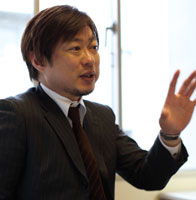 My desire to create a cutting-edgecommunity in Japan in the field of foreign and security policysimilar to that the one found in the United States, prompted me tojoin a Japanese think tank in 1999, the Japan Institute ofInternational Affairs (JIIA). As I had experienced, most Americanpolicy debates at major think tanks and universities in the U.S. keptquite close to real policy making in terms of both immediacy andimportance. In those days, Japanese policy making revolved arounddiscussions between politicians and government bureaucrats. Academicdiscussion by researchers and other experts on the subject did notfind a place in the actual policy making process. I realized thatpolicy making should not simply follow some predetermined path fixedby the government, but should be decided through an open discussionamongst think tank researchers, academic researchers and politicians.It should be based on evaluating various options that would finallyemerge through these debates. I wanted to try this idea at JIIA.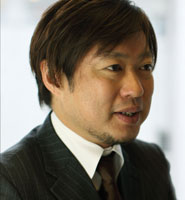
Iworked at JIIA and the Japan Forum on International Relations forabout six years. My work at the two think tanks was quite satisfying,as I had the opportunity to be involved in discussions regarding thedevelopment and implementation of several important policies.However, being in a managerial position, I gradually began to feeldissatisfied with my position. I was involved in raising operatingfunds from corporations in 2003, a time when the Japanese economicperformance was poor. I learned how hard it could be to manage acorporation relying on corporate funding. I keenly sensed thatmanagement and research could not be separated. I wanted a placewhere I could be involved in the policy making process in the truesense, and not just function as a “manager.” With this intent inmind, I became a university professor at Keio University ShonanFujisawa Campus (SFC).
The New Security Framework After 9/11
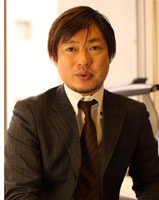 The world security situation changeddramatically after 9/11. Before this date, the conflict betweennations was the core component of international security framework.The rules of international law could be applied to such conflicts,and international crises and wars took a clearly visible form. It waseasy for a policy of deterrence to be created among nations wherethey agreed not to attack each other because they knew that if onecountry attacked then the other would retaliate. However, 9/11changed this basic framework. The concept of deterrence could not beapplied to asymmetrical threats after 9/11. State actors were notsure where to retaliate in the event of an attack, and it was notclear to them when the war ended. The proliferation of weapons ofmass destruction was highly critical when armed groups andterrorists were procuring these weapons and expanding their powerthrough them. The traditional logic of stability developed over thecourse of international relations discussions in the past no longerapplied. Now we need to reconsider how imbalanced relationshipsbetween nations and people, nations and goods, and nations andcorporations impact upon world security and stability. My mainresearch interest is to review the core logic of stability andpropose security policies in a changed context.
Envisioning SFC as a Policy MakingForum
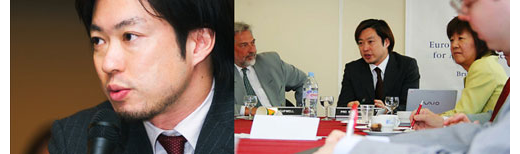
In a realm of international security,problems dealing with nuclear weapons, the long-term role of theJapan-U.S. alliance, and the international community’s response toissues like terrorism should not be discussed exclusively bygovernments. To resolve these issues, scholars need to share theirideas and narrow the gap between government expertise and scholarlyknowledge. Around the world today, academia and governments aredrawing close to resolve contentious global issues. Universities mustplay a constructive and decisive role, and I intend to create anenvironment where the SFCfaculty, administrative staff and students can discuss these matterswith an eye to transforming society.My vision is to create aJapanese-style “revolving door” policy making framework wheremore and more SFC academics can enter the government, participate inreal policy making, and then return to SFC to impart practicalknowledge. Under the Abe administration, Japan attempted to create aNational Security Council (NSC). However in the end a change innational leadership and the election of a new prime minister the billwas shelved. The Prime Minister Yasuo Fukuda did not push the planforward. The NSC was to serve as the headquarters for Japan’sforeign and security policy. I think it would be good for universityprofessors and other members of the private sector to serve as staffmembers of the NSC secretariat and be involved in policy making. Asstaff members of the NSC secretariat, they would be key players inpolicy making, including formulating Japan’s medium- to long-termstrategies and responding to international crises. But this scenariowould be implemented only if academics and politicians respect eachother’s opinion and earnestly strive to learn from each other’sexperience. The fact that Japan attempted to create an NSC makes itone step short of creating a policy making forum like the one in theUnited States.
Inspired by Academics in Other ResearchAreas
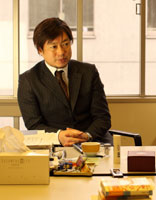 SFC has both researchers who createInternet infrastructure and researchers who generate web contentbased on the infrastructure. I can conduct distance learning classesin Japan, China, and South Korea precisely because I work at SFC,which is home to both infrastructure and web-content experts, aswell. Various excellent fora exist within university faculties whereresearchers in related fields share their knowledge and experiences.If researchers from a variety of different fields become members ofthe same forum, remote and recondite research fields can support andenrich each other. For example, if I talk about the kinds ofgeopolitical space used by terrorism, nuclear weapons, and otherthreats to human security, a professor of space design from theFaculty of Environment and Information Studies may share with me howpeople have viewed the concept of space over the course of history.The two of us can then use the same concepts of space and environmentto conduct research which was once considered belonging to entirelydifferent research fields. When we talk to each other, we can learnand absorb much. This is very stimulating and interesting. At SFC, Ihave learned that such “chemical reactions” occur and greatlybenefit research.
A Brief Background of AssociateProfessor
JIMBO, Ken
Associate Professor Jimbo specializesin international security, security in the Asia-Pacific region,regionalism in East Asia, and Japanese defense and security policy.Associate Professor Jimbo graduated from Keio University Faculty ofPolicy Management in 1996, completed the master’s program at KeioUniversity Graduate School of Media and Governance in 1998, andearned a Ph.D. (Media and Governance) there in 2003. Today he worksas a research fellow at the Tokyo Foundation while simultaneouslyholding several other positions. He has served as a member of theCouncil on Economic and Fiscal Policy’s Special Board of Inquiryfor Examining “Japan’s 21st Century Vision,” a research fellowat the Japan Institute of International Affairs, and the director ofresearch at the Japan Forum on International Relations.
(30 September 2009)
Archive