
From game programming to discovering the mystery of life
TOMITA, Masaru
ProfessorFaculty of Environment and Information Studies
Those college days when I made money bygame programming
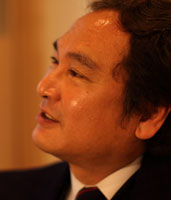 When I was an undergraduate student,all second year students were expected to take the programmingcourse, which I did not find interesting. For example in class, wehad to use Newton's method to derive a circle ratio "π",but I was not so excited about using programming method to obtain ananswer we already knew. At that time the Space Invaders game wasextremely popular. The game was designed in such a manner that if theplayer cleared all the stages, the game would start all over again. Ibecame so skillful at clearing the stages that the game never ended.Then I thought it would be fun to change the rules to make it moredifficult. Thus I started to self-study programming and create my owngames. I made Breakout or similar games and sold them to shops inAkihabara Electric Town. At times these games took three days andnights to design, and I could sell each game for about 800,000 yen.It was quite good earning for a university student like me.
I sensed the limits of computerprogramming
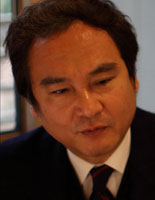 No longer satisfied with creatingaction games and making money, I became interested in intellectualgames. Being a dan holder in shogi or Japanese chess since juniorhigh school, I decided to develop a computer game of shogi.Programming the board and displaying the movement of pieces thatfollowed the rules were quite easy. However, I soon realized thatprogramming a string of thought process into the computer to allow itto play against human beings was quite daunting. In the game ofshogi, a player has approximately 30 possible moves per phase. Thismeans that a player has to come up with a cube of 30 moves in orderto speculate three phases ahead. Even some shogi beginners canspeculate 15 phases ahead in a crucial stage, and this means they canplan 30 to the power of 15 moves ahead. Even supercomputers wouldtake an extraordinary length of time to scan all these patterns andchoose the best option.
Encountering an academic field calledartificial intelligence
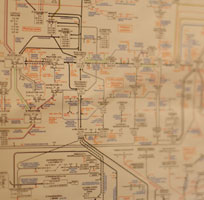 In reality, human players do not goover all options before choosing the best to make a move. Human mindquickly discards options that are useless, selects a few good movesand chooses the best. In other words, humans proficiently prune thesearch tree in order to make a selection. I asked my seminarprofessor how to program a computer to prune the search tree. He toldme that the procedure is taught in a field called artificialintelligence. He revealed to me that no Japanese laboratory has yetspecialized in artificial intelligence, and if I was serious aboutstudying the field, then I should go to the United States. I did someresearch about my options and decided to study under ProfessorHerbert Alexander Simon, the winner of the Nobel Memorial Prize inEconomics for research in artificial intelligence (more accurately,decision-making), at the School of Computer Science in CarnegieMellon University.
Understanding the limits of computers,I sensed the mystery of human life
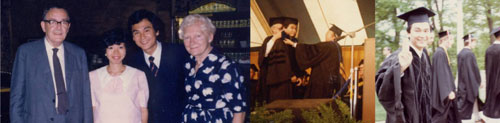 Though I faced many hardships, Ifinally managed to acquire a master's degree and a doctoral degreefrom Carnegie Mellon University. Afterwards, as Professor Simon'sResearch Associate and then as an Associate Professor, I continued toconduct research mainly in machine translation. With theestablishment of SFC, I returned to Japan but continued my researchin machine translation. The task of designing a machine translationsystem is quite difficult. Incorporating grammatical rules anddictionary functions into a computer may give it the ability toperform a literal translation, but still it will not be able to matchthe skill of professional translators. Understanding the meaning ofsentences, and amalgamating common sense with human knowledge arenecessary to make proper translation. In short, a programmer has toprogram all aspects of human knowledge into a computer in order totranslate properly. This procedure is as difficult as creating thehuman brain. It is rather difficult for a computer to do things thatthe human brain can do easily. On the contrary, a human brain,starting with a fertilized egg, develops automatically in about fiveyears through repeated cell divisions. This is quite an amazingprocess!
Becoming a medical student while beinga teacher
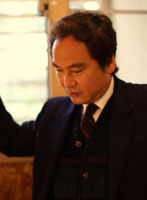 The more I studied artificialintelligence, the more I became interested in human mechanism and itsability to create an intelligent system through cell division. Thiswas the time when researchers around the world had just startedanalyzing the human genome, which is comprised of the letter stringATGC. Since the object of machine translation was also a series ofletter strings, I thought I could apply my research findings togenome analysis. The only hitch was that in order to research in thisfield, I needed knowledge of molecular biology. I felt that if I hadto acquire this knowledge, I should become a student of the GraduateSchool of Medicine. My only concern was that if I started studyingbiology while being a computer science teacher at SFC, I might not beable to show any substantial research results in a short time. I tookmy concern to Professor Hideo Aiso, then Dean of the Faculty ofEnvironment and Information Studies. He advised me: “Don't getobsessed with getting immediate results and confining yourself to onearea alone. It is vital for a professor at SFC to open the way in newresearch fields.” The late thirties of a researcher is an importantstage in his life. With Professor Aiso’s encouraging words duringthose crucial years, I overcame the fear of leaving a blank period inmy research career. I then decided to wear two hats for four years,one as a professor at SFC and the other as a student at the GraduateSchool of Medicine, Keio University.
Study together, search together
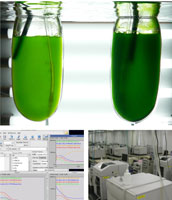 Since my enrollment as a student at theGraduate School of Medicine, biology has become the theme of myseminar at SFC. Whereas professors would generally teach a fieldafter having explored it themselves, my policy is to study andconduct research together with my students. SFC offers a uniqueenvironment to allow this to happen. Analyzing the genome string witha computer revealed to me many secrets of life. It is exciting for meto discover something unknown, things that are not in textbook, andthings that nobody in the world knows about. It is also exciting forstudents to experience these things together. SFC offers seminars invarious fields so that students do not need to limit their interestto a single area of study upon enrollment. They can participate inseminars from their first year and shift into other areas later on,if their subject of interest changes. This allows students to expandtheir investigative curiosity and discover their own research themes.SFC is an ideal university campus for students with such an ambition.
A Brief Background of Professor
TOMITA, Masaru
Professor Tomita graduated from KeioUniversity with a bachelor’s degree in Mathematics in 1981. Afterhis graduation, he enrolled in Carnegie Mellon University andacquired a master’s degree in 1983 and a Ph.D. in 1985, both thedegrees were in Computer Science. He conducted research at the Schoolof Computer Science, Carnegie Mellon University, as a researchassistant. He was promoted to the position of a Research Associate(1985) and then an Associate Professor (1987). From 1987 he has heldthe position of Associate Director at the Center for MachineTranslation. In 1990, Professor Tomita returned to Japan and took aposition of an Associate Professor at the Faculty of Environment andInformation Studies, Keio University, initially established when theShonan Fujisawa Campus was opened. He was appointed Professor in1997. While he was teaching, he acquired a Ph.D. in ElectricalEngineering from the Graduate School of Engineering, Kyoto University(1994), and a Ph.D. in Molecular Biology from the Graduate School ofMedicine, Keio University (1998). He was the Dean for the Faculty ofEnvironment and Information Studies from 2005 to 2007, and has beenthe Director of the Keio University Institute for AdvancedBiosciences since 2001. Major Honors: Presidential Young InvestigatorAward from the National Science Foundation, USA(1988); IBM JapanScience Prize(2002); Minister of Science and Technology Policy Awardin recognition for industry-academia-government collaborationperformance(2004); Prize for Science and Technology of theCommendation for Science and Technology by the Minister of Education,Culture, Sports, Science and Technology(2007)
Laboratoryfor Advanced Biosciences, Keio University
Institutefor Advanced Biosciences, Keio University
(22 May 2009)
Archive